







What Makes Something Big Feel Small
Words By Paige Glazer

My son’s first principal and his last will likely be the same. ¶ That’s not something you think about when you’re wrestling a five-year-old into a backpack that feels bigger than he is. But somewhere along the way, it becomes clear—there’s a level of continuity in leadership here that most people don’t talk about. You just feel it. And whether it’s said or not, it’s a big part of what makes a system work.
Brayden’s kindergarten year was the very first year McAllister Elementary School opened its doors—a brand new neighborhood school and, at the time, a new idea for our community. Principal Bivins Miller was there from the beginning, not just as a leader in title, but as someone who showed up wherever he was needed.
During Read Across America Week, he was a character, Mr. Incredible—fully committed, meeting kids where they were. In the car line, he was opening doors, helping a five-year-old who could barely manage his own seatbelt. There was no rush to it. Just an intentional patience that sticks out about what I remember most about those early years.
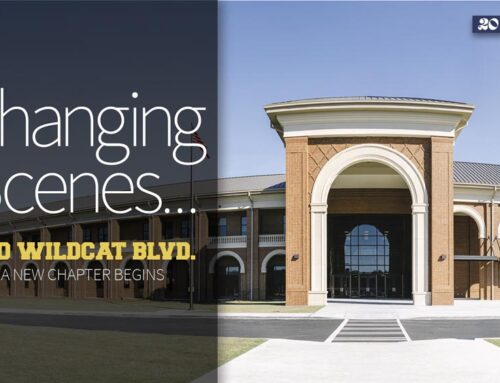
That same steady approach eventually carried Mr. Miller from those elementary halls into a much larger role—now leading at Richmond Hill High School. With the opening of the new campus this past August, he’s at the helm of the largest at-build high school in the state of Georgia. The scale is different—literally and figuratively. The pressure is different. But in a lot of ways, the job at its core isn’t.
He’s the kind of leader who doesn’t change with the scale—he adjusts to it.
In a system as large as ours, something could easily get lost. The experience could feel impersonal, almost transactional—big in all the ways that push people away. And yet, this is where the idea of placemaking shows up in a different form. Not through design or development, but through leadership and consistency—through the daily work of shaping an environment that still feels personal, even at scale.
So, how does that actually play out—day to day, in a school this big?
A day like Mr. Miller’s starts early, with decisions already lined up—some small, some not. In a building this size, leadership doesn’t happen behind a desk. It’s movement. It’s visibility. It’s being present in the places that matter: hallways, classrooms, conversations that may seem brief but carry weight.
That kind of presence isn’t accidental, it’s practiced.

“You learn how to read people quickly. How to meet a student where they are—whether that’s a kindergartener on day one or a high school junior figuring out what comes next. They want to know they have been seen, know they have been heard, and they want to feel valued,” he explains.
“They want to see it, not just hear it. In a place like the high school, going to the extracurricular and fine arts events, chatting with them in the hallways and lunch room. Asking real questions and listening to their answers. It’s easier with the younger ones. Their life experiences are limited—when you learn their favorite color or ask them about their cat or dog, and you remember it, they feel like they know you.”
Having worked across nearly every age group, Mr. Miller has adjusted without it feeling forced. Students need different things. So do teachers. So do parents. And somehow, it all has to land in the same place.
And carrying all of that at once—that balance—is a lot.
“Making connections with kids has been my approach at each level. I had experience with a lot of these kids because I knew them when they were elementary students. At the high school age, they are actually more shy—they don’t want to be seen. But when you ask them something and they realize you remember them, the connection is renewed. It’s the little things that take hardly any time. Thoughtful and very authentic intentionality is my strategy, even if it’s a little goofy and weird sometimes.”
In the education business, that responsibility could easily get diluted. It could become systems and schedules and checklists. But it doesn’t have to when leadership sets the tone.
There are decisions that impact hundreds of families at once. Situations that don’t make headlines but don’t leave your mind either. The kind of responsibility that follows you home. That’s part of the job people don’t always see. And still, there are moments that remind you why it matters. A student who turns a corner. A teacher who feels supported. Small wins that don’t show up in data but shape the culture of a school over time. Because the goal isn’t just academic. Better schools build better communities. It’s that simple.
And the people inside them—especially educators—carry more influence than we often acknowledge. They spend more waking hours with our kids during the week than we do. They help shape how they think, how they respond, how they show up in the world.
“I could talk for hours on the topic of culture being at the core of what we do,” he adds. “I have found that focusing efforts and being intentional about culture, time, priorities, and people—interwoven but centered on the success of the school community and those we serve—is what makes the difference.
The activities that we do with the whole staff translate to the department levels, and that spins down into their PLCs—it’s truly a ‘how can we work together toward success’ approach. I want to make this a place students want to come and feel supported. I expect the same thing of my staff for the kids—showing up at events, wanting to be here.”
Which brings it back to the question: How do you lead something this big without losing what makes it feel small?
Mr. Miller says, “Simply put, it is intentionality in everything we do. Showing up the same way, every day, for every student—whether they’re five years old and walking into school for the first time, or seventeen and getting ready to leave it.”
This is placemaking at its finest.